F136 - tech blog

A simple blog in the complex world of healthcare telematics.
Visit us:
RMI Migration - Preventing Legacy
by Zhenwu Duan, reading time:
4 mins
1. Overview
Remote Method Invocation (RMI), which has existed since the introduction of Java (since 1.1), is the invocation of a method of a remote Java object and implements Java's own version of Remote Procedure Call.
Java RMI was developed as part of the Java ecosystem to facilitate the creation of distributed systems where objects can interact across network boundaries.
2. Problem
A problem was discovered during the update of the project “ZTDV” that is preventing the Spring Framework update.
Project ‘ZTDV’ is an important in-house project that uses RMI to access various services in our ‘gem-cards’ project.
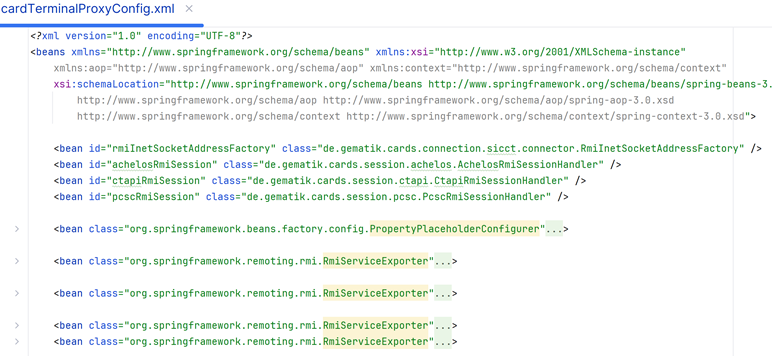
The class 'org.springframework.remoting.rmi.RmiServiceExporter' from 'spring-context' establishes the RMI connection between “ZTDV” and “gem-cards” until now, as shown in Figure below (rmi-config.xml in “ZTDV”).
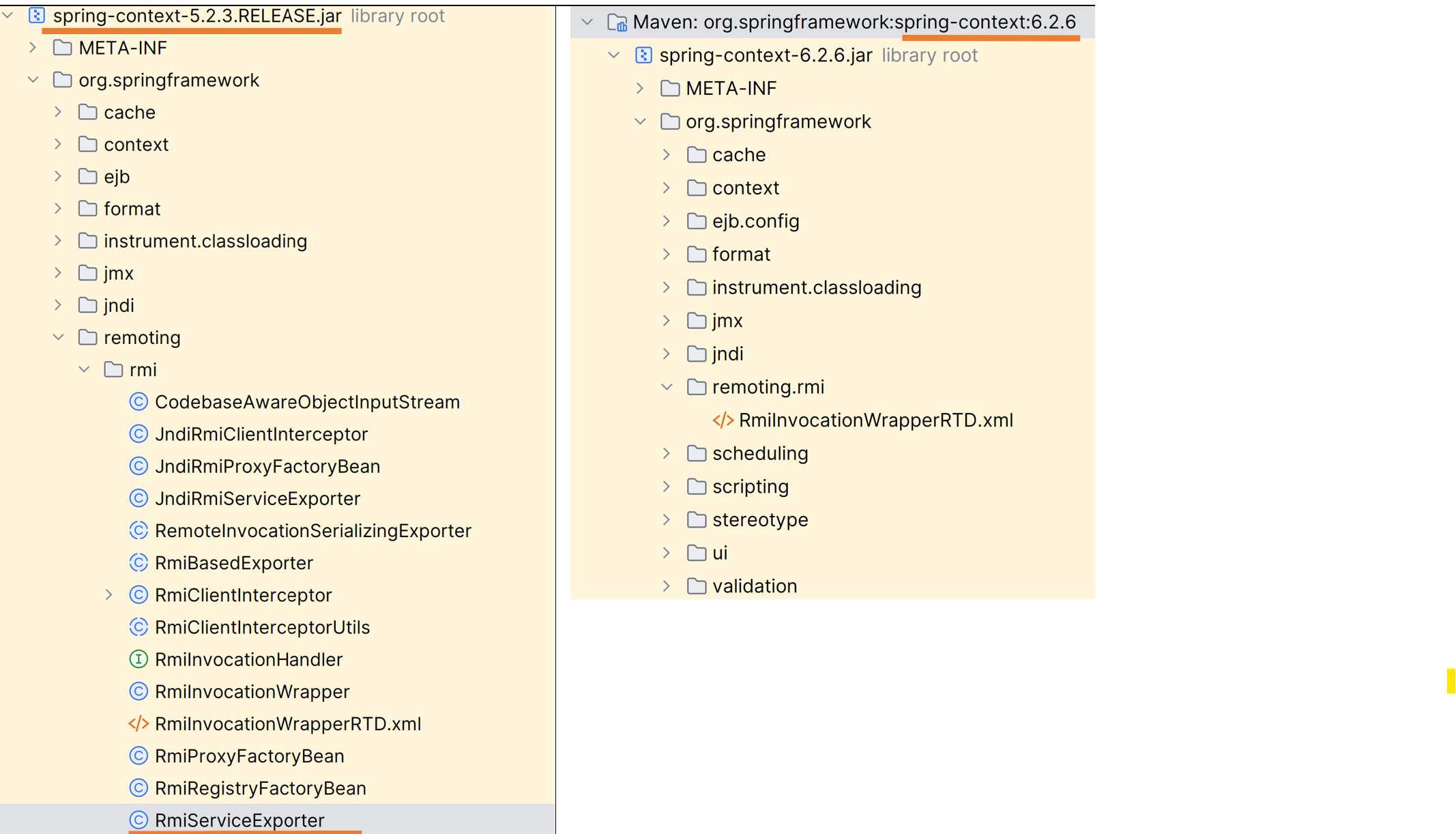
The current Spring version in project “ZTDV” is 5.3.39, with an update planned. However, Spring Framework 6.x.x and later no longer support RMI. All RMI classes have been removed in 6.x.x, as demonstrated by comparing spring-context versions 5.3.39 and 6.2.6. Consequently, the Spring Framework upgrade in the “ZTDV” project is blocked.
3. What is RMI's Current Position in the IT World?
- Java's Official Stance on RMI
Java officially discourages using RMI (Remote Method Invocation) for new projects. While RMI remains in maintenance mode and is technically supported, it is no longer under active development. The Java documentation clearly states that RMI is considered obsolete and rarely used in modern applications.
Recommended alternatives for distributed systems include:
- RESTful services
- gRPC
- Message-based architectures (e.g., RabbitMQ, Kafka)
- Spring Framework's Position on RMI
Spring currently recommends no longer using RMI for new applications. The Spring documentation indicates that RMI is obsolete and that modern, HTTP-based protocols such as REST (Spring Web, Spring WebFlux) or gRPC should be used instead. While RMI is still supported, development has ceased, and there are security and compatibility issues. For new projects, Spring recommends using REST APIs with JSON or other formats.
- Impact on Legacy Projects
Projects still using RMI face increasing technical debt. Migration to modern protocols is recommended to:
- Ensure long-term maintainability
- Improve security posture
- Enable cloud and microservices architectures
- Maintain compatibility with current frameworks and tooling
4. Implementing the problem solution in Project “ZTDV”
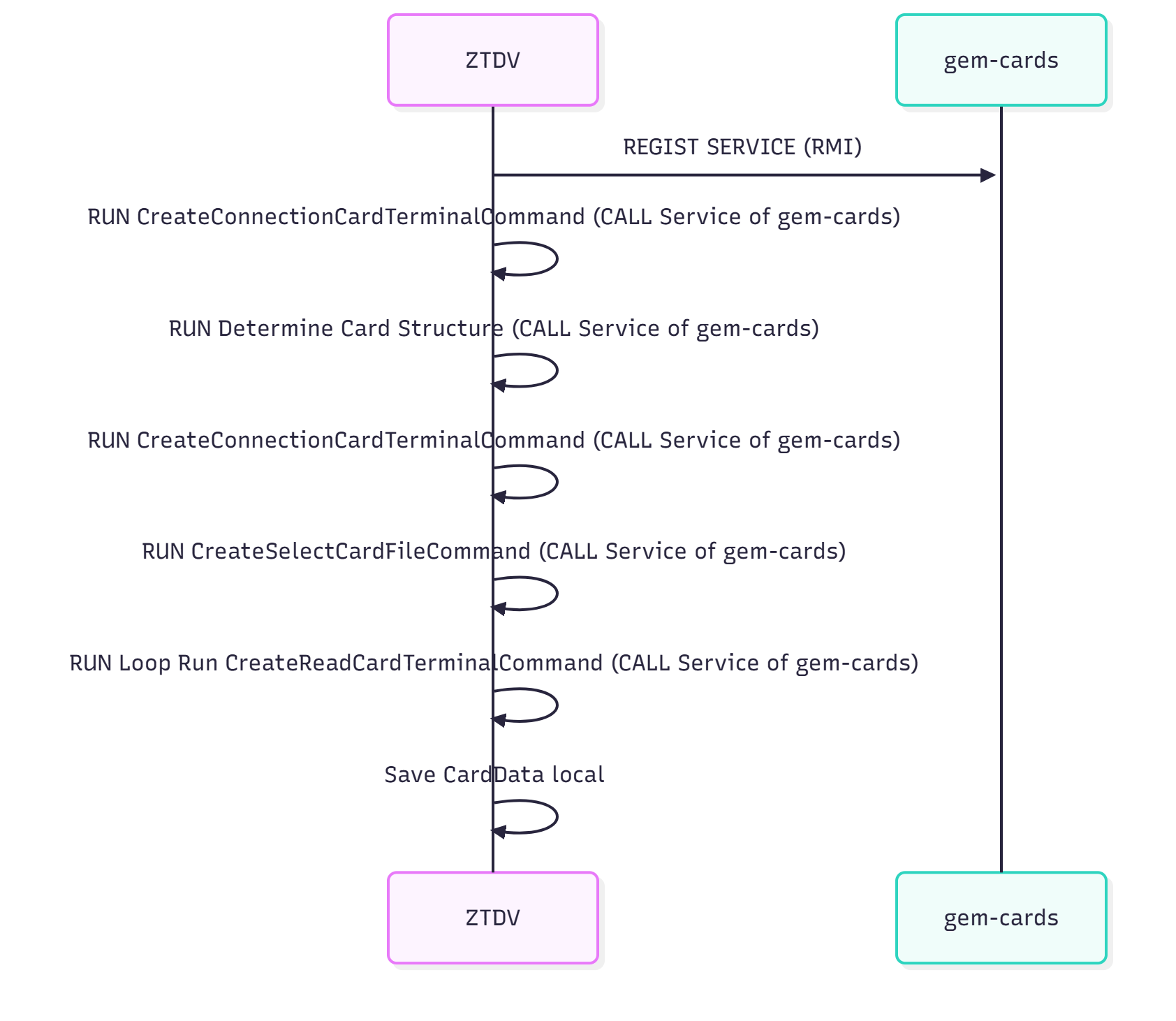
“Carddownloader” for example is a useful tool in “ZTDV”. Following figure shows the current implementation with RMI. The implementation is primarily located on the “ZTDV” side. The “gem-card” services are accessed remotely from “ZTDV”.
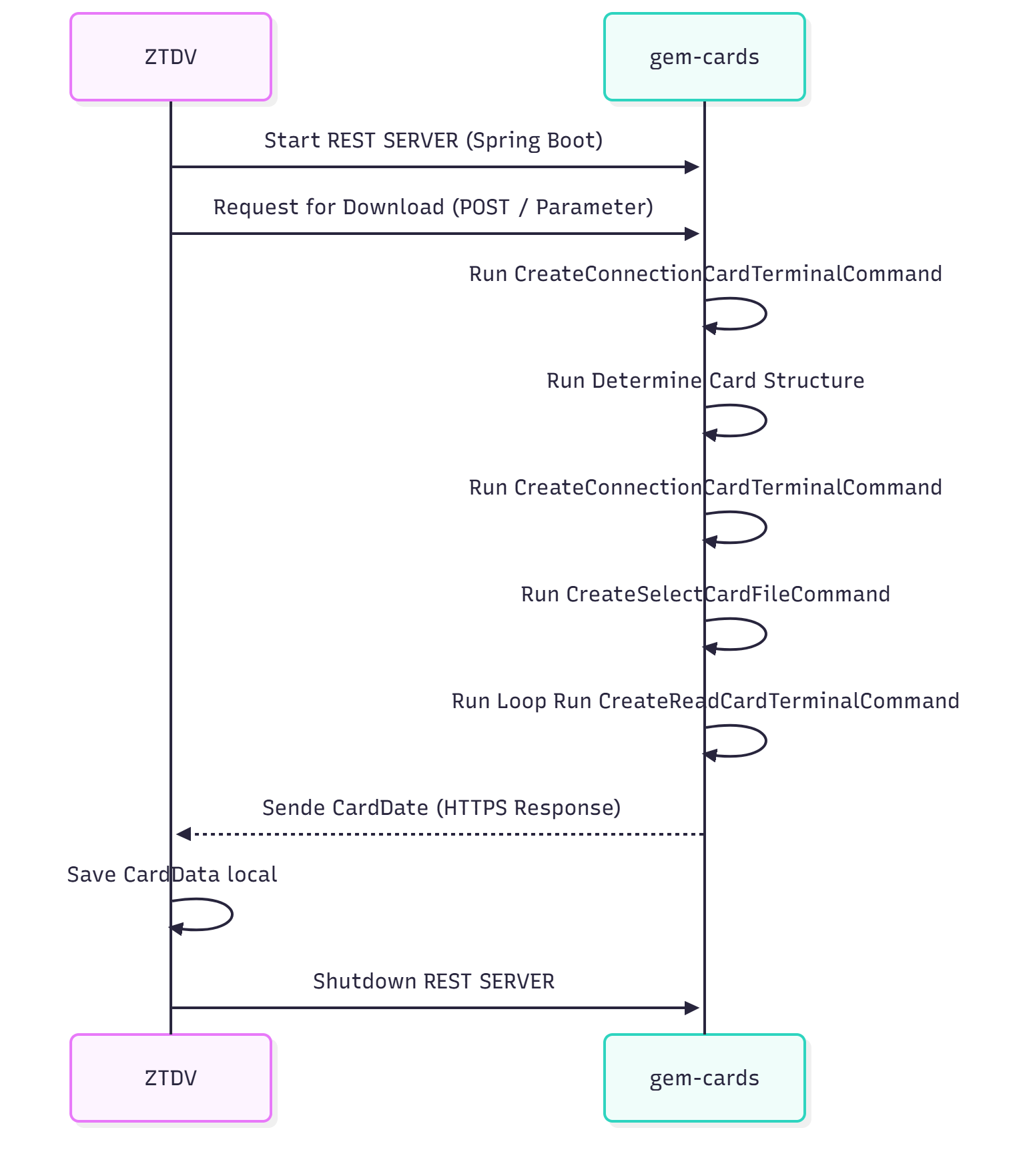
After removal of RMI, a clear client-server relationship exists. The implementation of the “Carddownloader” then resides on the “gem-cards” side, where the services are. The “gem-cards” services are called directly on-site through the endpoints like below
`[https://host/gem-cards/send-apdu]` is preferred for a single query
`[https://host/gem-cards/cardDownloader]` is preferred for multiple queries
The communication is secured by SSL/TLS.
The results are returned back to “ZTDV”, where they are saved for user
The lesson learned from migrating from RMI to REST is the need to define the calls cleanly. It's a shift in implementation.
5. A Non-Disruptive Migration Strategy
The migration from RMI to REST can be executed as a non-disruptive, localized change. This approach offers significant advantages:
-
Zero Service Interruption: The migration requires no downtime or interruption of existing functionality. End users experience seamless operation throughout the transition period.
-
Minimal Scope and Cost: By isolating the migration to the communication layer (RMI → REST), the core business logic and primary workflows remain unchanged. The refactoring is confined to:
- The remote invocation mechanism
- SSL/TLS configuration
- Client-server communication protocol
This containment strategy significantly reduces development effort, testing complexity, and deployment risk.
Key Benefits:
- Existing features continue operating without modification
- Changes are localized to the single layer (as shown above)
- Business logic remains untouched, reducing regression risk
- Gradual rollout is possible without affecting production systems
- Low risk of introducing new defects in unrelated components
The Example from Implementation demonstrates this principle, i.e., the REST endpoint replaces RMI communication while maintaining identical functionality for the card terminal operations. The “gem-cards” interface and business logic remain consistent.
This surgical, low-impact approach makes RMI migration an ideal template for modernizing other legacy components in Java applications.
6. Conclusion
Since REST replaces RMI, the Spring Framework can be easily updated to the latest release.
A good idea is to start the Spring Boot Server as a separate service or via a process management tool (such as Docker, Kubernetes, or a Windows service). This way, the server is always running and accessible to clients.
According to current development plans, RMI should no longer be used in new projects. Projects that currently use RMI should be gradually replaced with REST.
Migrating to Spring 6.x.x and replacing RMI with REST ensures your application is modern, secure, and maintainable. REST is the simplest and most flexible solution for most use cases.
- Use REST if you need a simple, platform-independent solution.
- Use gRPC if you need high-performance, binary communication.
- Use Message Brokers (e.g., RabbitMQ, Kafka) for asynchronous communication.
About The Author
Zhenwu Duan is responsible in the Smartcard team for the development and maintenance of test tools. His interests include various programming languages such as Java, Go, C#, Typescript, as well as system testing and PKI technology.